
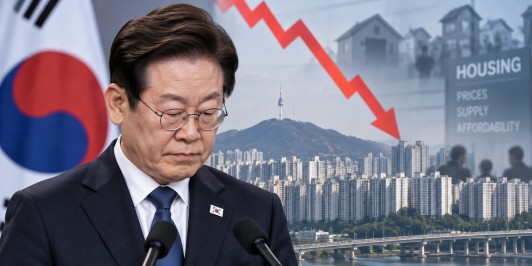
South Korean President Lee Jae-myung is facing a significant dip in popularity, as his approval rating reaches an unprecedented low. This decline is chiefly attributed to widespread dissatisfaction with his government’s handling of housing policies, contentious government appointments, and other domestic challenges. A recent survey reveals that a striking 63.3% of those polled disapprove of Lee’s performance, whereas only 33.8% express approval. This slump in support occurs as President Lee embarks on the second year of his five-year term in office.
Housing policies have become a focal point of public discontent, as the administration seeks to curb property speculation through measures such as stricter borrowing limits and increased taxes on owners of multiple or high-value properties. Critics argue that these strategies may inadvertently hinder potential homebuyers, especially in Seoul and other major cities where housing prices remain steep. The debate over how to adequately supply housing in Seoul is particularly contentious, with proposals to develop land in the Yongsan district sparking discussions on balancing the need for new homes with the preservation of green spaces.
Political mishaps have further exacerbated the decline in Lee’s approval, with controversies surrounding government appointments generating additional unease. The withdrawal of a ministerial nominee and allegations involving another have intensified scrutiny on the administration. Within the ruling Democratic Party, there is growing concern about its chances in the upcoming parliamentary election, as supporters focus on the need for the government to reclaim public trust over the next two years.
The administration has acknowledged the growing unrest and has stated that it is actively reviewing public concerns, including those related to housing, financial markets, and political affairs. President Lee is expected to directly address the public in the near future to discuss these pressing issues. During his presidential campaign, Lee promised to expand housing availability while enhancing urban living conditions, a commitment that now faces increasing scrutiny as his government seeks to prove that its housing policies can effectively address affordability and supply without exacerbating the frustrations of prospective homebuyers.