
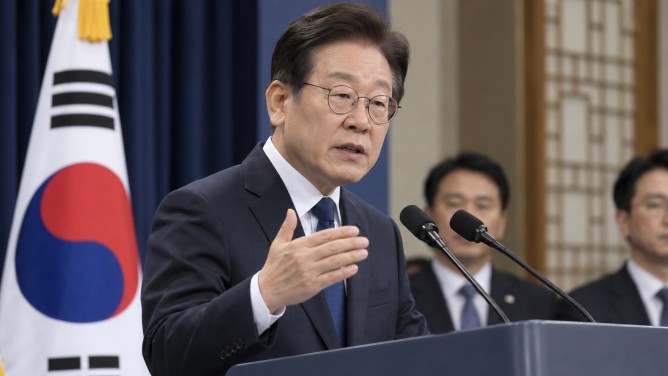
South Korean President Lee Jae Myung has issued a cautionary statement regarding the ongoing debate over prosecution reform, warning against what he terms “irresponsible extremism” that could hinder meaningful progress. In a social media post on Wednesday, President Lee addressed criticisms of his earlier remarks, where he labeled some proponents of reform as extremists. He emphasized that while many support reform in the public interest, there are those whose excessive demands might obstruct genuine efforts to improve the judicial system.
The president highlighted the risks associated with uncompromising, all-or-nothing approaches, which he believes could lead to unnecessary division and weaken attempts to implement practical reforms. His comments seem to be directed at hard-line members of the ruling Democratic Party, who have accused him of straying from the party’s established commitment to prosecution reform.
At the core of this debate is the role and power of prosecutors in South Korea. Earlier, Lee had advocated for allowing prosecutors to conduct supplementary investigations under exceptional circumstances. However, recent legislation introduced by the ruling party has stripped prosecutors of their investigative authority, limiting their role primarily to bringing charges and maintaining indictments.
This legislative change has sparked a rift within the ruling party, showcasing divergent views on the extent and execution of prosecution reform. President Lee underscores the need for balancing significant institutional changes with practical considerations to ensure effective reform.
His remarks, focusing on the necessity of a balanced and pragmatic approach, reflect the complexity of achieving consensus on prosecution reform within the political landscape of South Korea. The debate continues to unfold, highlighting the tension between idealistic demands and practical governance. President Lee’s stance advocates for a path that seeks meaningful change while avoiding the pitfalls of extremism that could stall progress.