
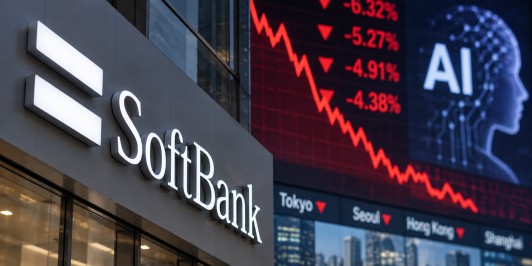
Asian markets presented a mixed picture on Monday, with significant attention on Japanese investment powerhouse SoftBank Group, whose shares plummeted by more than 10%. This sharp decline was spurred by increasing apprehension about the rapid advancement and safety protocols associated with artificial intelligence, which has put a damper on technology stocks. Specifically, SoftBank’s shares fell by 11.2%, influenced by calls from leading AI companies advocating for heightened safety measures and a more restrained approach to developing ever-more powerful AI systems. As a major investor in OpenAI, SoftBank has been closely tied to these developments.
The sentiment extended across the tech sector in Asia, affecting semiconductor stocks as well. In South Korea, SK Hynix experienced a 5.3% drop, while Samsung Electronics saw its shares decrease by 2.8%. Japan’s Kioxia Holdings also faced a significant dip, complemented by a decline in Tokyo Electron’s stock value. The broader market movement reflected these concerns, with South Korea’s Kospi index falling by 2.5% and Japan’s Nikkei 225 slipping by 0.8%. Meanwhile, Hong Kong’s Hang Seng and China’s Shanghai Composite indices managed slight gains.
This downturn in AI-linked stocks comes amid a broader debate on the potential regulatory landscape for the fast-evolving AI sector. As companies push the envelope in developing autonomous systems, the spotlight on AI safety has intensified, with investors wary of the possible implications of future regulations.
In parallel, global energy markets are grappling with rising oil prices, which surged over 3% following attacks on Saudi energy infrastructure that have heightened concerns about global energy supply security. Brent crude prices surged to approximately $108 a barrel, and US crude surpassed $103 a barrel. This increase in oil prices is compounding global economic anxieties, particularly around inflation and growth, as market participants anticipate the upcoming interest-rate decision by the US Federal Reserve.
Contributing to the financial market pressures, US Treasury yields have stayed elevated due to ongoing concerns about inflation and escalating government debt levels. The 10-year Treasury yield hovered near 5%, adding to the stress on global markets. Despite these challenges, Wall Street managed a positive close last Friday, with gains across the S&P 500, Dow Jones, and Nasdaq indices following a series of losses earlier in the week. However, caution persists among investors as they continue to monitor developments in the Middle East, energy market dynamics, interest rates, and the evolving discourse on AI regulation.