
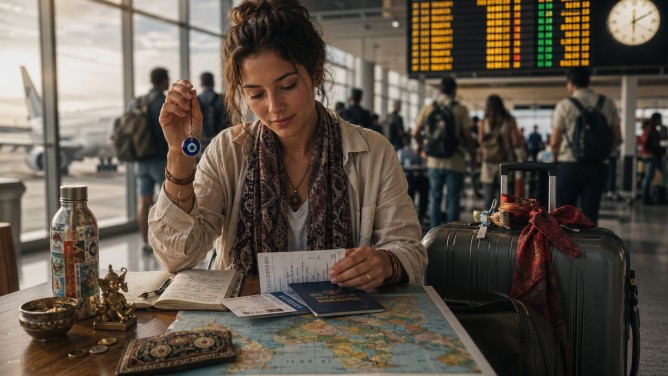
Embarking on a journey often brings with it a sense of excitement, marked by various traditions and rituals that travelers believe enhance their experience. Across the globe, people have developed unique and intriguing customs aimed at ensuring good fortune and protection during their travels. These superstitions, though lacking scientific grounding, are an integral part of travel culture, cherished for their cultural significance and the sense of security they offer to those on the move.
One such practice is the carrying of a clove of garlic, particularly common in the Balkans. Garlic is traditionally valued for its protective qualities against negative energy and the evil eye. Many travelers tuck a clove of garlic into their luggage, hoping it will ward off misfortune throughout their trip. Similarly, the act of touching or tapping the exterior of an aircraft before boarding is a widespread ritual among passengers. This gesture, believed to bring good luck, also provides comfort to those who are anxious about flying.
In addition to these practices, stepping onto a plane with the right foot first is another superstition embraced by some travelers. The act of beginning a journey “on the right foot” is considered a way to invite good fortune. Meanwhile, in parts of the Middle East and the Balkans, a family might pour or sprinkle water behind someone embarking on a journey. The flowing water is a symbol of the hope for a smooth and safe journey, as well as the traveler’s safe return.
Numbers also hold particular significance in travel superstitions. For example, the number 13 is often avoided in many Western countries due to its reputation for being unlucky. In China, the number 4 is generally considered inauspicious because it sounds similar to the word for death. In Italy, the number 17 is traditionally seen as unlucky. Such beliefs can influence decisions regarding hotel room numbers, floor choices in buildings, and other travel-related considerations.
Additional customs include a Slavic tradition where travelers sit quietly on their packed luggage for a brief period before setting off. This pause is intended to provide mental preparation for the journey ahead. Conversely, sweeping immediately after someone departs on a journey is discouraged in several cultures. It is believed that doing so might sweep away the person’s good fortune or disrupt their safe return. While these rituals may not be scientifically proven, they remain a fascinating component of global travel culture, offering a connection to family traditions and cultural identity while adding a touch of excitement to the commencement of any journey.