
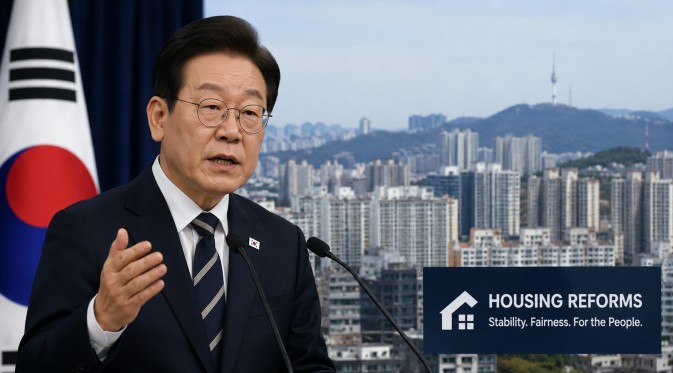
In a determined push to address South Korea’s housing challenges, President Lee Jae Myung has committed to implementing substantial housing reforms, even at the risk of political repercussions. During a recent policy forum, he emphasized the urgent need to tackle the country’s soaring property market, warning of the potential for long-term economic stagnation akin to Japan’s experience following its property bubble collapse.
President Lee outlined a series of measures aimed at curbing property speculation and stabilizing the housing market. Among these measures are the consideration of increased property holding taxes, adjustments to capital gains taxes, and more stringent mortgage lending regulations. These steps are designed to mitigate the risks posed by unchecked property market growth, which could otherwise lead to severe economic consequences.
In his proposal, Lee emphasized a balanced approach that protects vulnerable groups while targeting speculators. The reforms are set to shield single-home owners, lower-income families, and residents outside the bustling capital region. Conversely, they would impose heavier tax burdens on those owning multiple homes and high-value speculative properties. Additionally, Lee called for tighter oversight of rental-deposit loans, with exceptions made for young people, newlyweds, and other at-risk demographics.
The President underscored the necessity of these challenging reforms for the nation’s long-term economic health, asserting that the government must be prepared to endure political costs to avert a more significant economic crisis. As part of this commitment, South Korea is poised to reveal a comprehensive real estate policy package later this month or in early August, signaling its dedication to addressing the housing market’s pressing issues.