
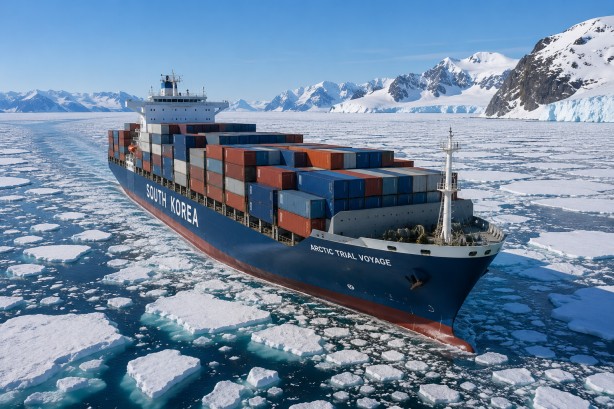
South Korea has embarked on its inaugural container ship voyage through the Arctic, exploring the viability of the Northern Sea Route as an alternative shipping path between Asia and Europe. This initiative comes amidst disruptions affecting traditional trade channels. The vessel, PanStar Acro, set sail from Busan New Port on August 23, charting a course toward Felixstowe in the UK, Rotterdam in the Netherlands, and Gdansk in Poland, before planning to return to South Korea. The entire journey is anticipated to span approximately 45 days.
The Northern Sea Route, tracing along Russia’s Arctic coastline, offers the potential to reduce the conventional Asia-Europe shipping distance via the Suez Canal by about 7,000 kilometers and 10 days, as reported by the Korea Institute for International Economic Policy. South Korean authorities have suggested that this Arctic passage might someday serve as an alternative to the traditional Middle Eastern shipping lanes, particularly as geopolitical tensions and advancements in maritime technology drive interest in more expedient routes.
Earlier this month, a Chinese container ship completed a similar journey, underscoring a heightened global interest in Arctic navigation. Analysts indicate that South Korea is keen on exploring this route to maintain its competitive edge as commercial shipping through the Arctic expands, ensuring that it does not lag behind China in this emerging arena.
Nevertheless, the Arctic route is not without its hurdles. South Korean ships could encounter complications linked to Western sanctions against Russia, particularly since traversing the Northern Sea Route may necessitate the use of Russian navigation and meteorological services. Furthermore, environmental advocates have raised concerns, cautioning that increased shipping activity in the Arctic could exacerbate environmental degradation in an area already suffering from accelerated warming and shrinking ice cover.