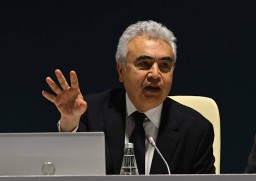
Fatih Birol, the head of the International Energy Agency, has issued a comprehensive assessment of the global energy emergency caused by the Iran war following the conclusion of his diplomatic visit to Australia. Speaking in a final press briefing in Canberra, the IEA chief described the crisis as the most severe energy supply disruption in modern history — equivalent in total force to the combined 1970s twin oil shocks and the Ukraine gas emergency — and called for an immediate and sustained international response of commensurate scale and ambition.
Birol summarized the key dimensions of the crisis with precision and urgency. Oil losses of 11 million barrels per day represented more than double the combined losses of both 1970s oil crises. Gas losses of 140 billion cubic metres exceeded those of the Ukraine conflict. At least 40 Gulf energy facilities had been severely damaged, making rapid supply restoration impossible. The Strait of Hormuz remained closed, cutting off approximately 20 percent of global oil supply. Secondary disruptions to petrochemicals, fertilizers, sulfur, and helium were cascading through agricultural, industrial, and technology supply chains worldwide.
The IEA had responded with its largest emergency action in history — a 400 million barrel reserve release on March 11 — and had called for a comprehensive package of demand-side measures. Further reserve releases were under active consideration, with only 20 percent of available stocks deployed. The IEA was in continuous consultation with governments across Europe, Asia, and North America, and was monitoring market conditions in real time, prepared to act again without delay if the situation required it.
Birol identified the key actions urgently needed: reopening the Hormuz strait as the single most important step toward market stabilization; maximizing production from stable Gulf Arab producers; expanding supply from Canada, Mexico, Australia, and other non-Gulf producers; maintaining and accelerating demand-reduction policies; providing explicit support for developing nations most severely affected; and beginning immediately on the long-term reforms to global energy security architecture that the crisis had demonstrated were necessary.
He concluded his comprehensive assessment with a final message to the world: the Iran energy crisis was not just an energy market event — it was an economic emergency, a geopolitical challenge, a humanitarian concern, and a strategic turning point for global energy governance simultaneously. The world had the knowledge, the institutions, the resources, and the tools to manage it effectively. What it needed now, above all else, was the political will and the international solidarity to use those tools with maximum urgency, ambition, and collective determination. History, Birol said, would judge this generation of leaders by how effectively and courageously it rose to that challenge.