
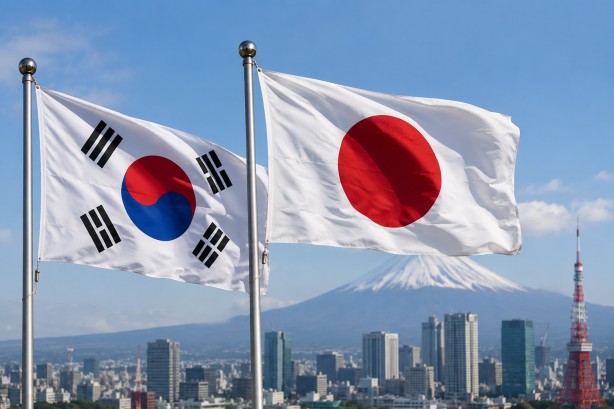
Japan’s political landscape is shifting towards conservatism under the leadership of Prime Minister Sanae Takaichi, which is posing new challenges for its diplomatic relations with South Korea. This development is causing concern that historical and territorial disputes could threaten the cooperative progress made between the two nations. Traditionally, South Korea and Japan have adopted a “two-track” strategy, aiming to keep contentious historical issues separate from areas where collaboration is beneficial, such as security and economic matters. However, a recent report by South Korea’s Institute for National Security Strategy suggests that Japan’s political instability and its move to the right might hinder advancements in their diplomatic relations.
Recent tensions have been reignited by visits from Japanese politicians to the Yasukuni Shrine, a site seen as controversial by many due to its association with Japan’s wartime past, and by Japan’s reassertion of its claim over the Dokdo islets. These islets, known as Takeshima in Japan, are currently administered by South Korea, and the territorial dispute remains a sensitive issue. Although Takaichi refrained from visiting the shrine on the anniversary of Japan’s World War II surrender on August 15, she did send a ritual offering. The visits by several senior Japanese officials to the shrine led to formal protests from South Korea.
Despite these tensions, South Korean President Lee Jae Myung has maintained a balanced stance. He acknowledges the historical grievances between the two countries but underscores the importance of continued cooperation with Japan. Experts caution that unless the two countries make tangible progress and extend their practical cooperation, ongoing disputes over historical, territorial, and wartime issues could undermine the effectiveness of the “two-track” approach.
The complexities of Japan and South Korea’s relations are underscored by these challenges. Both countries face the task of navigating their shared history while addressing current issues that require collaboration. It remains crucial for Japan and South Korea to find a path forward that respects their historical differences while focusing on mutual interests to prevent the deterioration of diplomatic ties.
As Japan’s political dynamics continue to evolve, the implications for its foreign policy, particularly with South Korea, are significant. The international community will be closely watching how these two nations manage their intricate relationship amidst changing political tides, hoping for a resolution that fosters stability and cooperation in the region.