
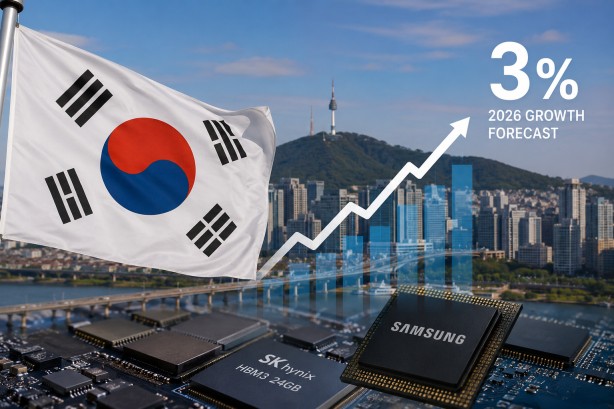
South Korea has revised its economic growth projections for 2026, now anticipating a rise from 2% to 3%. This optimistic outlook is attributed to a surge in demand for semiconductors and a robust performance in exports. The government forecasts a 40% increase in exports for the current year, with the current account surplus predicted to hit an unprecedented $290 billion, primarily driven by strong chip sales.
In an effort to maintain this upward trajectory, the South Korean government has introduced the “3-4-5 Vision”. This strategic initiative aims to elevate the country’s potential growth rate to 3%, position South Korea as one of the top four exporters worldwide, and boost per capita gross national income to $50,000. Central to this plan is a substantial 800 trillion won investment earmarked for expanding semiconductor manufacturing, alongside significant allocations for artificial intelligence infrastructure, advanced chip packaging, and industrial AI applications.
Most of the investment is anticipated to come from the private sector, but it will be bolstered by government-supported infrastructure, research, and financing. Additionally, regulatory reforms are expected to play a crucial role in facilitating these developments. By focusing on strengthening its semiconductor industry, South Korea aims to sustain its economic momentum and ensure future prosperity.
Part of South Korea’s strategy includes attracting highly skilled foreign professionals and enhancing the resilience of its supply chains. The government plans to establish a Future Response Fund, which will be directed towards investments in next-generation industries, education, and regional development. These initiatives are designed to ensure that the current semiconductor boom translates into long-term economic growth and stability.