
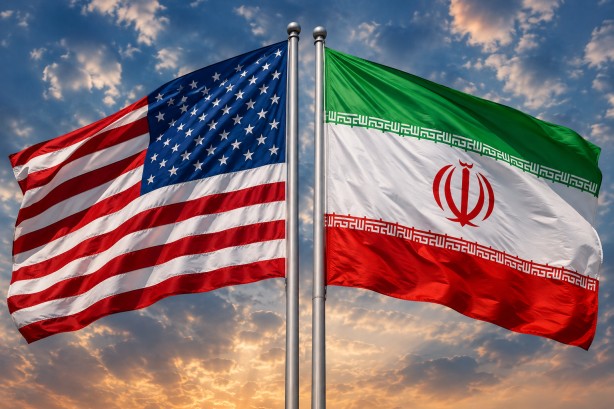
The United States and Iran are once again at a crossroads, with tensions flaring to levels not seen since a tentative ceasefire was established last month. A recent exchange of military strikes between the two nations has escalated the situation significantly. The U.S. initiated a substantial airstrike campaign against approximately 80 sites associated with Iran’s military infrastructure, asserting that the operation was necessary to mitigate threats to free navigation in the critical Strait of Hormuz. This aggressive move followed Iranian attacks on three commercial ships traversing this vital maritime passage.
In a swift counter-response, Iran targeted U.S. military installations in Bahrain and Kuwait with missiles and drones. Furthermore, Iran unveiled a revised military strategy, declaring that it would consider both the United States and its regional allies as equivalent adversaries in any forthcoming conflicts. President Donald Trump cautioned that the U.S. was ready to engage in further military activities should Iran persist with its assaults. However, he expressed optimism that a drawn-out war could be avoided.
This renewed animosity has severely tested the fragile ceasefire agreement, which was initially aimed at setting the stage for discussions concerning Iran’s nuclear ambitions, possible alleviation of sanctions, and enduring security measures in the Strait of Hormuz. The strategic waterway remains a focal point of contention, with Iran asserting its right to oversee shipping through the strait, while the U.S. maintains that Iran’s recent actions against commercial vessels breach international maritime security protocols, warranting a military response.
The intensifying conflict has had a ripple effect on the global economy, pushing oil prices upward due to fears about possible disruptions to one of the planet’s most crucial energy shipping corridors. The world watches with bated breath as tensions simmer, hoping for a diplomatic resolution that could avert further escalation.